WANT TO REDUCE YOUR ELECTRICITY BILLS ? DO CHECK THIS OUT !

Haven’t you checked out the previous post ? Need of Power Factor.


By far we have come to know what is power factor , power triangle, need of reactive power in our system.

siemens-syncon-bjaeverskov-310314-052-300ppi.jpg


But a big question arises , what is the need of all these?Why should we be concerned about it?

With increase in so much inductive loads, the power factor of the system is decreasing.Since power consumed depends upon this power factor.

P= Vโ‚— Iโ‚— cosษธ
ย 


Iโ‚—= P/Vโ‚— cosษธ
ย 


P= โˆš3Vโ‚— Iโ‚— cosษธ
ย 


Iโ‚—= P/โˆš3 Vโ‚— cosษธ


It is clear from above relations that for a fixed power and voltage, the load current is inversely proportional to the power factor.


We call it low power factor if the value is less than 0.8.
ย 

Causes of low power factor:-


  • The ac motors that we use are of inductive type. Due to inductive load, the current lags the voltage by huge angle thus ษธ increases and cosษธ decreases.
  • The industrial electric discharge lamps ,arc lamps, heating furnaces operate at a low lagging power factor withdrawing more current from the system.
  • Variable load.
  • Harmonic current is a huge reason behind low pf.
  • Even tranformers lead to a low pf.


Disadvantages of low power factor :-

  • Greater size of conductor: Keeping the power fixed, at constant voltage the conductor will have to carry more current at low pf. This requires large conductor size. ย 


  • Large kVA rating: kVA rating of the equipment is inversely proportional to pf. The smaller the pf, the larger is the kVA rating. Thus at low pf, the kVA rating of the equipment has to be made more, making the equipment larger and expensive.ย 


  • Lower voltage regulation: The low lagging pf causes larger current to flow thus leading to voltage drops. Thus voltage at receiving end reduces than the sending end leading to lower voltage regulation.


  • Larger copper loss: Larger currentย  causes more IR losses all the elements of the supply voltage. This results in poor efficiency.


  • Reduced handling capacity of system: The lagging pf reduces the handling capacity of all the elements of the system. It is because the reactive component of current prevents the full utilization of installed capacity.
ย 
ย 

Need of power factor improvement :-


  • From consumer’s end: A consumer has to pay electricity charges for his maximum demand in kVA plus the units consumed. If the consumer improves the pf, then there is a reduction in his max kVA demand and consequently there will be annual saving due to max demand charges. Although pf improvement involves extra annual expenditure on account of pf correction equipment, yet improvement of pf to a proper value results in the net annual saving for the consumer.
ย 
  • From generating station’s end: A generating station is as much concerned with power factor improvement as the consumer. The generators in a power station are rated in kVA but the useful output depends upon kW output. As station output is kW= kVA ร—cosษธ, therefore, number of units supplied by it depends upon the pf. The greater the pf of the generating station, the higher is the kWh it delivers to the system. This leads to the conclusion that improved pf increases the aesrning capacity of the power station.
ย 

Now the question isย  how will we do that ? How to achieve an improved power factor ?

Power factor improvement can be done by using the following equipments:-

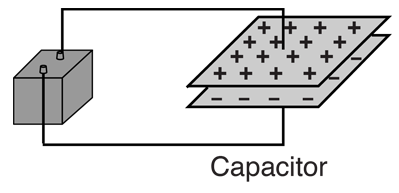
  • Static capacitor: The pf can be improved by connecting capacitors in parallel with the equipment operating at lagging pf. The capacitor draws a leading current and partly or completely neutralizes the lagging reactive component of load current. This raises the pf of the load. For 3 loads, the capacitors can be connected in delta or star. Static capacitors are invariably used for pf improvement in industries.
ย 
ย 
ย 
Real image of capacitor bank
ย 
  • Synchronous Condenser: It takes a leading current when over-excited and thus behaves as a capacitor. An over-excited synchronous moor running on no load is known as a synchronous condenser. When such a machine is connected in parallel with the supply, it takes a leading current which partly neutralizes the lagging reactive component of the load. Thus the power factor is improved.
ย 
ย 
ย 
ย 


  • Phase advancers: Phase advancers are used to improve the pf of induction motors. The low pf of an induction motor is due to the fact that its stator winding draws exciting current which lags behind the supply voltage by 90. It provides exciting ampere turns to the rotor circuit at slip frequency. By providing more ampere turns than required, the induction motor can be made to operate on leading pf like an over-excited synchronous motor.ย 
ย 
ย 
ย 
ย 
ย 
ย 
ย 
What is most economical power factor ?
ย 
The value to which the power factor should be improved so as to have maximum net annual saving is known as most economical power factor.
ย 
ย 
ย 
Recommended posts!
ย 
ย 

BASIC ELECTRICAL PARAMETERS. TOO HARD TO REMEMBER? CHECK THIS OUT!

ย 
ย 
Till then happy engineering ! ๐Ÿ™‚


WHY IS POWER FACTOR NOT KEPT UNITY ? IS REACTIVE POWER IMPORTANT IN OUR SYSTEM ?

FIRST WE NEED TO KNOW WHAT IS POWER FACTOR.

POWER FACTOR METER


DEFINITION : ย 

The cosine of the angle between the voltage phasor and the current phasor is defined as power factor (P.F) of an electrical system.


WHAT IS PHASOR?

They are actually rotating vectors which are used to represent harmonically changing physical quantities like a.c. voltage, current. The projection of these vectors on y- axis gives the value of ac voltage and current at that instant.


While discussing power factor , there are some basic things which we must clear!

POWER TRIANGLE :

In an ac ckt , there is a phase difference between voltage and current. The term cosษธ is called power factor of the circuit.ย 


If the ckt is inductive , current lags behind the voltage and the power factor is known as lagging power factor.

If the ckt is capacitive, current leads the voltage and the power factor is known as leading power factor.


ย 

If the ckt is resolved into two components:
a) Icos ษธย ย  in phase with V

b) Isin ษธย ย  90 out of phase with V

The component Icos ษธย ย ย  in known as the active/wattful component.
The component Isin ษธย  is known as the reactive/wattles component.

Refer the below diagram:

ย The active power is expressed in watts or kW
ย The reactive power is expressed in VAR or kVAR
ย The apparent power is expressed in VA or kVA

Refer the below diagram:


Thus from the above formulas we come to know that if reactive component increases power factor decreases, i.e. they are inversely proportional.


Still why don’t we elude the reactive part from our system when we can do it ???


Need of reactive power:

1. Voltage control:

While active power is the energy supplied to run a motor etc, reactive power provides the important function of regulating voltage. If voltage on a system is not high enough, active power cannot be supplied.

On an A.C. system voltage is controlled by managing production and absorption of reactive power.

It is mainly done due to the following reasons:

    • Both customer and suppier’s appliances are designed to operate within limited range of voltages, so if the voltage exceeds or falls from that value the appliances may get damaged.
    • For proper operation of electrical power equipment abd protection from overheating, losses, and maintaining stability.

2. For magnetization:

We know current is inversely proportional to power factor of a system.
For ex. If a motor operates at a p.f. 1 having 100 kVA, 230 V rating. It would take a current of 434.7 A.
But if it is made to operate at a p.f 0.8 (say), it would take a current of 543.48 A.ย 
This extra current of 108.78 A is going into magnetizing the motor .
Reactive power is primarily due to the magnetizing current.


What if reactive power is made zero?ย 


If the reactive power is made zero, the motor won’t start though supplied with proper voltage. It basically helps in maintaining the residual magnetism, without which no rotary machine runs.


So we maintain power factor at 0.8 to 0.9 and not 1(unity).

Other formulas of power factor:

  • P.F. = R/Z = Resistance/ Impedance
  • P.F. = VIcosษธ/VI = Active power / Apparent power


ย 


Till then happy engineering ๐Ÿ™‚

WHY CAN’T DC VOLTAGE BE STEPPED UP LIKE AC VOLTAGE ? WHAT IS PULSED D.C ? EVERYTHING YOU NEED TO KNOW ABOUT D.C. !!

Let’s clear the basics first.

WHAT IS ALTERNATING CURRENT ?

As the name ‘ALTERNATING’ suggests ,it is the current which reverses its direction periodically within a second.

DOES A.C. HAS FREQUENCY ?
The standard frequency used in our country is 50 Hz, which means it changes its direction 100 times in 1 second !

WHAT IS DIRECT CURRENT ?

As the name ‘DIRECT’ suggests , it is the unidirectional flow of charge . It is basically useful for those power systems which need uni-polar voltage or current. The amount of current can change but it will always flow from one point to another.

DOES D.C.HAS FREQUENCY ?
Yes, D.C. do have frequency. But not like A.C.. Just because it’s patterns are not like A.C. doesn’t mean that it has no frequency.

But lot of you might be thinking what is the utility of a zero frequency current ? Right ?

Well, I can explain you that.
As zero has its significance in mathematics, same goes for this too!

D.C. has no time period. As we can see in the graph below.
So it has zero frequency.
Zero frequency is a signal which has a constant amplitude as function of time.


SOME D.C. EVEN HAS FREQUENCY !

D.C. containing some amount of A.C. ripple is not a pure d.c. But as it does not change its polarity, so we call it d.c..
Though theoretically it has a.c. characteristics , still it is d.c. in practice.
Those currents have a frequency not equal to zero(0).

WHY CAN’T A TRANSFORMER STEP-UP A DC VOLTAGE ?

A transformer works on the principle of Faraday’s law of electromagnetic induction. So it needs varying flux to induce emf in it’s secondary coil. In alternating current , current is constantly alternating from positive to negative(sinusoidal) which results in alternating magnetic flux. Therefore, whenever a conductor gets cut by that alternating magnetic flux emf is induced in that conductor.
If the number of turns in secondary is more than in primary, we get a stepped-up voltage.

But in case of d.c. there is no change in current direction. No current is alternating from positive to negative as direction is constant. Though flux production is possible, flux cut is not possible as the conductors are static as well. So, no necessary emfs are induced in conductor.

No emf = No voltage = No voltage stepping up/down.

That is the reason why d.c. is not mostly used in transmission ๐Ÿ™‚

What is Pulsating D.C. ?

It is a periodic current which changes in value but never changes it’s direction.

BUT D.C. CAN ALSO BE STEPPED UP!!!

CRAZY RIGHT ๐Ÿ˜€

With the help of dc choppers.

A chopper is a dc to dc converter where the output d.c. voltage increases than input voltage(in case of step-up chopper).

Advantages of dc voltage-

  • There is no inductive or capacitive loss in d.c..
  • Corona losses are much less than a.c..
  • No proximity effect.
  • Requires less amount of conductor material for transmission.

Continue reading “WHY CAN’T DC VOLTAGE BE STEPPED UP LIKE AC VOLTAGE ? WHAT IS PULSED D.C ? EVERYTHING YOU NEED TO KNOW ABOUT D.C. !!”

THE NEUTRAL POINT IN A STAR CONNECTED 3-PHASE SUPPLY IS GROUNDED. WHY? EVER THOUGHT OF IT!


BEFORE WE COME TO THE POINT, LET’S CLEAR THE BASICS-

WHAT IS NEUTRAL POINT ?

A Neutral point is the point where the algebraic sum of currents in three phase system is equal to zero.ย 


i.e. Ir + Ib + Iy = 0 ย  [where; Ir = current in Red phase, Ib = current in Blue phase, Iy = current in yellow phase]

WHAT DOES A STAR CONNECTED 3ฮฆ SUPPLY LOOK LIKE ?

UNGROUNDED NEUTRAL

WHAT IS NEUTRAL GROUNDING ?

The process of connecting neutral point of 3-phase system to earth is known as neutral grounding.

GROUNDED NEUTRAL


WHAT IS NEUTRAL SHIFTING ?

Due to unbalance of load the neutral point shifts towards the Red phase(say).


The effective line to neutral voltage between points O & R will increase. Those receiving power through this phase, faces an over-voltage, which can damage the appliances connected to.


The effective line to neutral voltage between points O & B will decrease. Those receiving power through this phase, faces an under-voltage, which can damage the appliances connected to.


The effective line to neutral voltage between points O & Y will decrease. Those receiving power through this phase, faces an under-voltage, which can damage the appliances connected to.
ย 
ย 
where, V = line to neutral voltage
x = shift in neutral
ย  ย  ย  ย  ย ย  R = red phase
ย  ย  ย  ย  ย ย  B = blue phase
ย  ย  ย  ย  ย ย  Y = yellow phase
ย  ย  ย  ย  ย ย  O = neutral point
The alternators can even get de-synchronized.
ย 

NECESSITY OF NEUTRAL GROUNDING ?

The neutral point is made grounded, so that if ever unbalancing of load occurs, the excessive current would flow to earth rather than frying everything connected to the system!


Recommended posts!

WANT TO REDUCE YOUR ELECTRICITY BILLS ? DO CHECK THIS OUT !

WHY IS POWER FACTOR NOT KEPT UNITY ? IS REACTIVE POWER IMPORTANT IN OUR SYSTEM ?

WHY CANโ€™T DC VOLTAGE BE STEPPED UP LIKE AC VOLTAGE ? WHAT IS PULSED D.C ? EVERYTHING YOU NEED TO KNOW ABOUT D.C. !!

EASIEST WAY TO SOLVE CIRCUIT NETWORK PROBLEMS! PART-I

EASIEST WAY TO SOLVE CIRCUIT NETWORK PROBLEMS! PART-II

LACK KNOWLEDGE IN ELECTRICAL LAWS & THEOREMS ? NO WORRIES. CLICK TO FIND OUT!

BASIC ELECTRICAL PARAMETERS. TOO HARD TO REMEMBER? CHECK THIS OUT!


Till then happy engineering ๐Ÿ™‚

EASIEST WAY TO SOLVE CIRCUIT NETWORK PROBLEMS! PART-II

Check out the previous post : EASIEST WAY TO SOLVE CIRCUIT NETWORK PROBLEMS! PART-I


MILLMAN’S THEOREM :
This theorem is useful because any number of parallel voltage sources can be reduced to one equivalent one.


JACOB MILLMAN


It states that-


Any number of current sources in parallel may be replaced by a single current source whose current is the algebraic sum of individual source currents and source resistance is the parallel combination of individual source resistances.


How to solve a circuit by using this theorem-


  • Obtain the conductance of each voltage source and find G, the equivalent conductance removing the load.


  • Apply Millman’s theorem to find V, the equivalent voltage source given by-


  • Determine R, the equivalent series resistance with the equivalent voltage source(V).


  • The current through the load is then given by-


RL being the load resistance.


Applications-

  • This theorem is applicable to a network having a combination of voltage and current sources.
  • This theorem is applicable only to two sporces connected directly in parallel.


RECIPROCITY THEOREMย  : When the places of voltage and current source in any network are interchanged, the amount of magnitude of the current and voltage remains the same.


It states that


In any linear bilateral network, if a source of emf ‘E’ in any branch produces a current ‘I’ in any other branch , then the same emfย  ‘E’ acting in the second branch would produce the same current ‘I’ in the first branch.


How to solve a circuit using this theorem-

  • The branches between which reciprocity is to be established areย  to be selected first.
  • The current in the branch is obtained using conventional network analysis.
  • The voltage source is interchanged between the branches concerned.


  • The current in the branch where the voltage source was existing earlier is calculated.


Applications-


  • This theorem is applied to analyze Ultrasound generated by high intensity surface heating of elastic bodies.
  • This theorem is applied to determine line load generated surface waves on an isotropic half-space.

ย 
SUBSTITUTION THEOREM:This theorem in its simplest form tells that for branch equivalence, the terminal voltage and current must be same.
It states that-
The voltage across the current through any branch of a dc bilateral network being known, this branch can be replaced by any combination of elements that will make the same voltage across and current through the chosen branch.


How to solve a circuit using this theorem-


  • First obtain the concerned branch voltage and through current given by Vxy and Ix-y.
  • The branch may be substituted by an independent voltage source as shown below.

Applications-

  • This theorem gives us special insights in circuit behavior.
  • This theorem is also used to prove several other theorems.


COMPENSATION THEOREM :

According to this theorem, any resistance in a network may be replaced by a voltage source that has zero internal resistance and a voltage equal to the voltage drop across the replaced resistance due to the current which was flowing through it.

It states that-

If a change is made in the resistance of any branch of a network when the current was originally I , the change of current at any other point in the network may be calculated by assuming that an emf has been introduced into the changed branch while all other sources have their emf suppressed and are represented by their internal resistances only.


How to solve a circuit using this theorem-

  • First take the main circuit
  • Then calculate the branch response due to change in R3.


  • Then add dR to R3.


  • New branch response due to change in R3.


Applications-

  • Used in the development of the Scattering parameters
  • ย Used in certain radiation and propagation related problems.


TELLEGEN’S THEOREMย  :This theorem is applicable to any network made up of lumped two terminal elements.
It states that-
In any linear, non-linear, passive, active, time variant or time invariant network the summation of power is equal to zero.
ย 

Applications-

  • Used to design filters in signal processing applications.
  • Topology and structure of reaction networks can be analyzed using this theorem.


Recommended posts !

Till then happy engineering ๐Ÿ™‚

EASIEST WAY TO SOLVE CIRCUIT NETWORK PROBLEMS! PART-I

WHAT DO YOU MEAN BY A THEOREM ?

A Theorem is a logical statement that has been mathematically proven . Although there are exceptions, some statements have been traditionally called theorems even before their proofs have been found.

There are various kinds of theorems applicable for solving various circuit problems and finding out theย Electrical Parameters

[P.S. : For solving basic circuit networks we generally useย some laws . But for more complex networks the following theorems are apt. ]


THEVENIN’S THEOREM :ย  When current in one branch of a network is to be determined or when the current in an added branch is to be calculated, we use thevenin’s theorem.ย 
It states that-


  • Any two bilateral,linear, active network consists of electrical parameters like resistances, capacitance and inductance.


  • They can be replaced by an constant voltage source in series with an equivalent resistance, where the constant voltage source is the open circuited voltage of load terminals.
  • The resistance is the equivalent resistance of the circuit as viewed from open circuited load terminals after replacing the active sources by their internal resistances.

LEON CHARLES THEVENIN


How to thevenise a circuit:

    • Take the main circuit.


  • Remove the ‘load resistance’ where current is to be measured.


  • Find the open circuited voltage ‘Voc’ which appears across the two terminals from which the resistance has been removed.


  • Replace the active sources by their internal resistances, then calculate the equivalent resistance of the network as viewed from ‘open circuited load terminals’. This is called Rth.


  • Replace the entire network by a single thevenin’s voltage in series with Thevenin’s resistance(Rth).


  • Connect the load resistance RL back to its terminal and calculate current flowing through it.


ย 

ย  ย  ย  ย  The formula:- ย  ย 

Applications:

ย 
Useful for analyzing circuits where one particular resistor in the circuit is subject to change and re-calculation of the circuit is necessary with each trial value of load resistance,to determine voltage across it and current through it.
ย 
MAXIMUM POWER TRANSFER THEOREM : For analyzing communication networks, we use this theorem.
ย 
It states that-
ย 
Maximum power output is obtained from a network when the load resistance is equal to the output to the output resistance of the network as seen from the terminals of the load.

With respect to the above figure:-

However, ย  ย  ย  ย  ย  ย  ย  ย  ย 

ย 
But dPL/dRL = 0
ย 
ย 

Applications-

It helps in making a circuit having maximum power dissipation correctly at the load of resistance.


NORTON’S THEOREM : For resolving a network into a constant current source and a parallel resistance , we use Norton’s theorem.
ย 
It states that-
  • Any two terminal bilateral, linear, active network consists of electrical parameters like resistance, inductance, capacitance.
  • They can be replaced by a constant current source in parallel with an equivalent resistance where the current source is the short circuited current following through short circuited load terminal. The resistance is the equivalent resistance of the circuit as viewed from ‘open circuited load terminal’ after replacing the active sources by their internal resistances.
EDWARD LAWRY NORTON
How to nortonise a circuit:
  1. Take the main circuit.
  1. Find the short-circuited current flowing through the short circuited load terminal.
  1. Compute the resistance of the circuit as viewed from the open circuited load terminals. This resistance is called ‘Rn’ .
  1. Replace the entire network by a single current source and equivalent resistance in parallel.
  1. Connect R2 back to the terminal from where it was removed.
ย  The formula: ย  ย  ย  ย  ย  ย  ย  ย  ย  ย 
Applications:
  • It is easy to simplify a circuit diagram by allowing to search partial solution in the selected zoneย  to be analyzed.
  • Used in transmission line drive calculation.


SUPERPOSITION THEOREM : For solution of networks in which some branches may contain sources of emf, we use superposition theorem.ย 

It is applicable only to linear networks where current is linearly related to voltage as per ohm’s law.

How to solve a network using this theorem-

For ex:- In the figure when V0 = 0, I = 2A; find I whenย  V0 = 10V ?


Solution:- When V0 = 0, the circuit will look like below-
This time it is evident that I = 2A
Next V0 = 10 V is applied.
Utilizing the concept of superposition, the circuit diagram will be like-
This time-
Therefore, net current through the required resistor is-
Applications:
This theorem is applicable where we have to determine the current in one particular branch of a network containing several voltage/current sources.

To be continued inPart -II


Recommended posts !


Till then happy engineering ๐Ÿ™‚

LACK KNOWLEDGE IN ELECTRICAL LAWS & THEOREMS ? NO WORRIES. CLICK TO FIND OUT!

DIFFERENCE BETWEEN LAW& RULE ?

A law in science is a statement based on repeated observations.ย 
ย It expresses a casual relationship between entities under certain conditions, and is often expressed mathematically.
FOR EX: The Laws of Thermodynamics (so often quoted without the mathematical context and misstated for that very reason) are good examples.


A rule is an informal axiom that expresses a philosophical point.
FOR EX: Right hand rule, Voltage divider rule etc.ย 


ย 

LET’S GET STARTED WITH THE LAWS & RULES:-


  • OHM’S LAW:

    GEORG SIMON OHM


The current flowing through a conductor is directly proportional to the voltageย  difference across the ends of the conductor ,keeping the physical parameters(temperature , pressure etc) constant.
ย ย  IโˆV
ย or, V/I = CONSTANT
ย  ย  ย  ย  or, V/I = R ย  ย 


ย  ย  ย  ย  This ‘R’ is known as RESISTANCE of the conductor.


  • WATT’S LAW:

    JAMES WATT
ย  Watt’s law states that power(P) equals to ย  ย ย  theย  product of voltage(V) and current (I).
ย  ย  ย  i.e. P = V๏ฝ˜ I
ย  ย  ย  Combining with ohm’s law we get:
ย  ย  ย  P = (Vยฒ)/R , P = IยฒR.
  • COULOMB’S LAW:
CHARLES-AUGUSTIN DE COULOMB


The magnitude of the electrostatic force of attraction or repulsion between two point charges is directly proportional to the product of the magnitudes of charges and inversely proportional to the square of the distance between them.
The force is along the straight line joining them. If the two charges have the same sign, the electrostatic force between them is repulsive; if they have different signs, the force between them is attractive.ย 

  • LAW OF RESISTANCE:
This law states that the resistance of a conductor is directly proportional to the length of the conductor, inversely proportional to the cross-section of the conductor and depends upon the nature of the conductor at constant temperature.
ย  ย  ย  Where, R = resistance of the conductorย 
ย  ย  ย  ย  ย  ย  ย  ย ย  L = length of the conductorย 
ย  ย  ย  ย  ย  ย  ย  ย ย  A = cross-sectional area of the conductor material
ย  ย  ย  ย  ย  ย  ย  ย ย  โด = specific resistance of the conductor material.
  • VOLTAGE DIVIDER RULE: There are two important parts to the voltage divider:ย 
ย * THE CIRCUITA voltage divider involves application of a voltage source across a series of two resistors. We’ll shall call the resistor closest to the input voltage(Vin)R1, and the resistor closest to ground R2. The voltage drop across R2 is called Vout that’s the dividend voltage our circuit exists to make. ย ย 


ย *THE EQUATIONThe voltage divider equation assumes that we know three values of the above cicuit, the input voltage (Vin), and both resistor values (R1 and R2). Given those values we can use this equation to find the output voltage(Vout).
  • FARADAY’S LAWS OF ELECTROLYSIS:


* FIRST LAW–ย states that the chemical deposition due to the flow of current through an electrolyte is directly proportional to the quantity of electricity (coulombs) passed through it.i.e. mass of chemical deposition: mโˆ Quantity of electricityย  ย  ย  ย  ย  ย  ย  ย  ย  ย  ย  ย  ย  ย  ย  ย  ย  ย  ย  ย  ย  ย  ย  ย  ย  ย  ย  ย  ย  m = Z๏ฝ˜QWhere Z =ย  constant of proportionality and also known as electrochemical equivalent of the substance.

*SECOND LAWย states that when the same quantity of electricity is passed through several electrolytes, the mass of the substances deposited are proportional to their respective chemical equivalent.ย So, 1 Faraday = 1F = electrical charge carried out by one mole of electrons.ย  ย  ย  1F = charge on an electron๏ฝ˜ Avogadro’s number.ย  ย  ย  1F = number of Faraday.


  • KIRCHHOFF’S LAWS:
ย  ย  ย  ย  ย  KIRCHHOFF’S FIRST / CURRENT LAW (KCL) –states that the total current or charge entering a junction or node is exactly equal to the charge leaving the node . In other words the algebraic sum of all currents entering and leaving a node must be equal to zero.ย 
I(exiting)+ I(entering) = 0

This is also known as CONSERVATION OF CHARGE.ย 
ย  ย  ย  ย  ย ย  Here, the three currents entering the node, I1, I2, I3 are all positive value and he two currents leaving the node I4 and I5 are negative values. We can write the equation as-
ย  ย  ย  ย  ย  ย  ย  ย  ย  ย  ย  ย  ย  ย  ย  ย  ย  ย  ย  ย  I1+I2+I3-I4-I5 = 0ย 
GUSTAV ROBERT KIRCHHOFF


ย  ย  ย ย  KIRCHHOFF’S SECOND / VOLTAGE LAW (KVL) –states that in any closed loo network , the total voltage around the loop is equal to the sum of all the voltage drops within the same loop. In other words the algebraic sum of all voltages within the loop must be equal to zero.ย 
ย 
This is also known as CONSERVATION OF ENERGY.ย 
Starting at any point in the loop continue in the same direction noting the direction of all the voltage drops, and returning back to the same starting point. It is important to maintain the same direction either clockwise or anti-clockwise or the final voltage sum will not be equal to zero.
  • JOULE’S LAW OF HEATING : ย  ย  ย  ย  ย  ย  ย  ย  ย  ย  ย  ย 
JAMES PRESCOTT JOULE


ย ย  The heat produced due to the flow of current within an electric wire, is expressedย  in unit of joules. Now the mathematical representation is as follows:
ย  ย  ย  ย  1.ย  The amount of heat produced in a current conducting wire, is proportional to the square of the amount of current that is flowing through the wire, when the electrical resistance of the wire and the time of current flowing are constant.

ย  ย  ย  ย  ย  ย  ย  ย  ย  ย  ย  ย  ย  ย  ย  ย  i.e. H โˆ iยฒ [where R and t are constant]
ย  ย  ย  ย  2.The amount of heat produced is proportional to the electrical resistance of the wire when the current in the wire and the time of current flowing are constant.

ย  ย  ย  ย  ย  ย  ย  ย  ย  ย  ย  ย  ย  ย  ย ย  i.e. H โˆ R [where I and t are constant]
ย  ย  ย ย  3. The heat generated due to the flow of current is proportional to the time of current flowing, when the electrical reistance and the amount of current is constant.

ย  ย  ย  ย  ย  ย  ย  ย  ย  ย  ย  ย  ย  ย  ย  i.e. H โˆ t [where I and R is constant]
therefore, ย  ย  ย  ย  ย  ย  ย  ย  ย ย  H โˆย  iยฒ.R.t [where I, R, t are variables]
H = 1/J. iยฒ.R.t [where J is a joule constant]


  • FLEMING’S LEFT & RIGHT HAND RULE:
JOHN AMBROSE FLEMING


ย  ย  ย  ย ย LEFT HAND RULE (motor rule) states that if the first three fingers of the left hand are held mutually at right angles to each other and if the index finger indicates the direction of original field, and if the middle finger indicates the direction of current flowing through the conductor , then the thumb indicated the direction of force exerted on the conductor.


RIGHT HAND RULE (generator rule) – states that if the first three fingers of left hand are held mutually right angles to each other and if the forefinger represents the direction of the line of force, the thumb points the direction of motion or applied force, then the middle finger representsย  the direction of induced current.


  • FARADAY’S LAWS OF ELECTROMAGNETISM:
FIRST LAWstates that whenever a current carrying conductor cuts any magnetic field, emf is induced in it. ย 


SECOND LAWstates that the rate of induced emf is directly proportional to the rate of change of magnetic flux linkage.


  • LENZ’S LAW:

    EMIL LENZ


states that the direction of induced emf is such that it tends to oppose the cause producing it.


DID YOU KNOW?


  • BIO SAVART LAW:ย  states that the magnetic flux density of which dB is directly proportional to the length of the element dL , the current I, the sine of the angle and ฮธ between direction of the current and the vector joining a given point of the field and the current element and is inversely proportional to the square of the distance of the given point from the current element r.ย 


  • AMPERE’S CIRCUITAL LAW: states that the integral of magnetic field density (B) along an imaginary closed path is equal to the product of current enclosed by the path and permeability of the medium.


JAMES CLERK MAXWELL


  • SEEBACK EFFECT: states that if two junctions of thermo-couple are placed at different temperature, then an emf will be produced in thermo-couple which will be proportional to the temperature difference.

ย 

THOMAS SEEBECK


ย 

BASIC ELECTRICAL PARAMETERS. TOO HARD TO REMEMBER? CHECK THIS OUT!


ย 

WHAT DO YOU MEAN BY A PARAMETER?

Parameters are those physical quantities which are measuredย  by using proper electrical devices.

ย 
Let us find out :
ย 
  • VOLTAGE:ย  Voltage is what makes electric charges move.ย ย It is the ‘push’ that causes charges to move in a wire or other electrical conductor enabling them to do work such as illuminating a light etc. ย  ย  ย  ย  ย  ย  ย  ย  ย  ย  ย  ย 
ย  ย  ย  ย  ย  ย  ย  ย  ย  ย  ย  ย  ย  ย  ย  ย  ย  ย 
ย 


  • POTENTIAL DIFFERENCE: The Potential difference between two points in a circuit is the electrical pressure or voltage required to drive the current between them.ย 

ย  ย  ย  ย  ย ย 

  • ELECTROMOTIVE FORCE: It is the force that causes a current of electricity to flow.

ย  ย  ย  The above parameters are denoted by ‘V’.
ย  ย  ย ย  S.I. Unit ‘ VOLT’.
ย 
  • CURRENT: It is the rate at which electrons move.ย 
ย 

ย  ย  ย ย  [Ampere = coulomb/second

ย 
ย  ย  ย ย  One coulomb= charge of 6.28*10^18 electrons]
ย  ย  ย  ย  ย  ย  ย  ย  ย  ย  ย  ย  ย  ย  ย  ย  ย  ย  ย  ย  ย  ย ย 
ย 

  • ย RESISTANCE: The characteristic feature of an element(metal, non-metal, insulator) by the virtue of which it opposes the flow of electrons(due to bonds between protons and electrons, as well as to collisions) is called electrical resistance.
ย  ย  ย ย  It is denoted by ‘R’.
ย  ย  ย  ย  ย ย  S.I. Unit is ‘OHM’.
ย  ย  ย  ย  ย  ย  ย  ย  ย  ย  ย  ย ย 


ย 
ย RESISTOR: A resistor is a passive electrical component which creates resistance in the flow of electric current.
ย 
ย 


  • CAPACITANCE: The ability of a component or circuit to collect and store energy in the form of an electrical charge is called electrical capacitance.
ย  ย  ย ย  It is denoted by ‘C’.
ย  ย  ย ย  S.I. Unit is ‘FARAD’.


ย 
  • ย  CAPACITOR: A capacitance is a passive two-terminal electrical component used to store energy electrostatically in an electric field.


ย 
  • INDUCTANCE: The characteristic property of an electrical conductor by the virtue of which it opposes the rate of change in flow of current is called electrical inductance.ย 
ย  ย  ย  ย ย  It is denoted by ‘L’.
ย  ย  ย  S.I. Unit is ‘HENRY’.
ย  ย  ย  ย  ย  ย  ย  ย  ย  ย  ย  ย  ย  ย  ย  ย ย 
ย 


  • INDUCTOR:ย  An inductance is a passive two-terminal component which stores energy in a magnetic field when electric current flows through it.
ย 
  • IMPEDANCE: The amount of opposition faced by alternating current when it passes through a conductor.
ย  ย  ย  ย  ย  It is denoted by ‘Z’.
ย 
  • FREQUENCY: Number of cycles per second in an alternating current sine wave is known as frequency.
ย 
NETWORK PARAMETERS-
  • CIRCUIT: It is the conducting part/path through which either an electric current flows or tends to flow.
  • BRANCH: Parallel path of a circuit is known as a branch.ย 
  • NODE: It refers to any point on a circuit where two or more circuit elements meet.ย 
  • JUNCTION POINT: It refers to a point where three or more branches meet together.
  • LOOP: It is the closed path of a circuit.
  • MESH: It is the simplest loop.
ย 
ย 

ย  ย  ย  ย  TYPES OF ELECTRICAL NETWORK

ย 
ย  ย  ย  ย  ย 
  • ACTIVE NETWORK: An electricalย  network that contains one or more than one source of emf is known as an active network.ย  It consists of active elements like battery or a transistor.ย 
ย 
  • PASSIVE NETWORK: An electrical network that does not contain any source of emf is known as a passive network.. It consists of passive elements like R,L,C.ย 
ย 
  • LINEAR NETWORK: An electrical network in which the parameters of resistance ,inductance,and capacitance are constant with respect to current or voltage is known as a linear network.
ย 
  • NON-LINEAR NETWORK: An electrical network in which the parameters of resistance, inductance, and capacitance varies with respect to current and voltage is known as a non-linear network.
  • BILATERAL NETWORK: An electrical network in which the magnitude of the current remains the same when the voltage polarity is reversed is known as a bilateral network.
  • UNILATERAL NETWORK: An electrical network in which the magnitude of the current changes when the voltage polarity is reversed is known as an unilateral network.
  • LUMPED NETWORK: An electrical network in which all the network elements are physically separable is known as lumped network.
  • DISTRIBUTED NETWORK: An electrical networkย  in which the circuit elements are not physically separable.ย 
ย 


Recommended posts !

WANT TO REDUCE YOUR ELECTRICITY BILLS ? DO CHECK THIS OUT !

WHY IS POWER FACTOR NOT KEPT UNITY ? IS REACTIVE POWER IMPORTANT IN OUR SYSTEM ?

WHY CANโ€™T DC VOLTAGE BE STEPPED UP LIKE AC VOLTAGE ? WHAT IS PULSED D.C ? EVERYTHING YOU NEED TO KNOW ABOUT D.C. !!

THE NEUTRAL POINT IN A STAR CONNECTED 3-PHASE SUPPLY IS GROUNDED. WHY? EVER THOUGHT OF IT!

EASIEST WAY TO SOLVE CIRCUIT NETWORK PROBLEMS! PART-II

EASIEST WAY TO SOLVE CIRCUIT NETWORK PROBLEMS! PART-I

LACK KNOWLEDGE IN ELECTRICAL LAWS & THEOREMS ? NO WORRIES. CLICK TO FIND OUT!

WAS ELECTRICITY ACTUALLY โ€œINVENTEDโ€?


Till then happy engineering ๐Ÿ™‚

WAS ELECTRICITY ACTUALLY “INVENTED”?

What would our lives be without electricity? Ever thought of it? Horrible right?Don’t worry. It does exist and it allows us to enjoy life in so many ways.

Since electricity is a natural force that exist in our world, it didn’t have to be invented. It did, however , have to be discovered and understood. Most people give credit to Benjamin Franklin for it, but his experiments only helped establish the connection between lightning and electricity, nothing more.

Hence electricity can be defined as follows:

  • Flow of charge.
  • The physical flow of electrons, referred to as an electrical current.
  • A type of energy fueled by the transfer of electrons from positive and negative points within a conductor.

BENJAMIN FRANKLIN

Benjamin Franklin had one of the greatest scientific minds of his time. He was interested in many areas of science, made many discoveries, and invented many things, including bifocal glasses. He took things a big step ahead . Came up with the idea that lightning was a form of this flowing electricity.

In 1752, Franklin conducted his famous kite experiment. In order to show that lightning was electricity, he flew a kite during a thunderstorm. He tied a metal key to the kite string to conduct the electricity. Just as he thought , electricity from the storm clouds transferred to the kite and electricity flowed down the string and gave him a shock. He was lucky enough that he did not get hurt but the experiment proved his idea!


WHO MADE THE APPLICATION OF ELECTRICITY POSSIBLE…?

THOMAS ALVA EDISON
THE INCANDESCENT LAMP

It’s Thomas Alva Edison.
Thomas Alva Edison is another prolific name in the history of electrical engineering and the choice to list him second behind Tesla was a difficult one, but perhaps the right one. Edison may not have invented the first light bulb but the work of him and his staff at the Menlo Park research and development facility led to the development of the worldโ€™s first long-lasting and commercially successful light bulb. Commercializing the electric light bulb required the building of electrical transmission utilities and his Edison Illuminating Company constructed the countryโ€™s earliest electrical grids. AC may be the main form of how energy is sent from power plants to buildings, but we still use AC/DC converters in the home and direct current in modern electronic devices. By the end of his life, Edison was listed as an inventor on 1,093 U.S. patents and while itโ€™s accepted by many that Edison relied heavily on his โ€œmuckerโ€ research staff to develop many of these patents, his business success and futuristic vision make him an undoubted luminary in the early days of electrical engineering.


THE WIRELESS MAN….!!!

NICOLA TESLA

Nikola Tesla , an engineer known for designing the alternating-current (AC) electric system, which is still the predominant electrical system used across the world today. He also created the “Tesla coil,” which is still used in radio technology. Born in what is now Croatia, Tesla came to the United States in 1884 and briefly worked with Edison before the two parted ways. He sold several patent rights, including those to his AC machinery, to George Westinghouse.

DID YOU KNOW…?

Tesla and Thomas Edison grew to be fierce competitors, but in the end, Edison had the upper hand during their lifetimes. Because he was the CEO !๐Ÿ˜’

Throughout his career, Tesla discovered, designed and developed ideas for a number of important inventions โ€” most of which were officially patented by other inventors โ€” including dynamos and the induction motor. He was also a pioneer in the discovery of radar technology, X-ray technology, remote control and the rotating magnetic field โ€” the basis of most AC machinery. Tesla is most well-known for his contributions in AC electricity and for the Tesla coil.


THE FATHER OF ELECTROMAGNETISM. DO YOU KNOW HIM….?

Any guesses??

MICHAEL FARADAY

Faraday began his great series of experiments in which he discovered electromagnetic induction. These experiments would form the basis of the modern electromagnetic technology that’s still used today.

In 1831, using his “induction ring”โ€”the first electronic transformer Faraday made one of his greatest discoveries: electromagnetic induction, the “induction” or generation of electricity in a wire by means of the electromagnetic effect of a current in another wire.

FARADAY’S INVENTIONS

In the second series of experiments in September 1831 he discovered magneto-electric induction: the production of a steady electric current. To do this, Faraday attached two wires through a sliding contact to a copper disc. By rotating the disc between the poles of a horseshoe magnet, he obtained a continuous direct current, creating the first generator. From his experiments came devices that led to the modern electric motor, generator, and transformer.

Faraday’s laws of Electromagnetism:

FIRST LAW: Whenever a conductor is placed in a varying magnetic field an EMF gets induced across the conductor (called as induced emf ), and if the conductor is a closed circuit then induced current flows through it.

SECOND LAW: The magnitude of induced emf is equal to the rate of change of flux linkages with the coil. The flux linkages is the product of number of turns and the flux associated with the coil.

LENZ’S LAW: The direction of induced emf is such that it tends to oppose the cause producing it.


…..THE PRESENT SCENARIO……

Electricity is a major contributor to a nations economic development. It is the wheel that drives most aspects of everyday life in society. A nation is a compendium of activities and people whose progress is driven by the infrastructural components. Electricity is the source of fuel for so many sectors of an economy. We all live by electricity, our hospitals need electricity for the safe delivery of children and for surgery and other purposes. Our airports need electricity for them to work and ensure the safety. Though knowing this, we still keep on wasting the energy which takes such a long process to generate. When will we stop?

THESE PIONEERS GAVE THEIR BEST TO PROVE THE POWERS OF NATURE TO US.

…..WE SHOULD PROTECT IT…..


INTRODUCTION

SO HERE I AM INTRODUCING MY FIELD OF STUDY!

A bulb.

Basically this branch of engineering deals with study and application of electricity , electronics and electromagnetism. Its is a beautiful branch dealing with one of the largest and most diverse technological and engineering disciplines in today’s world.

That sounds great right…!

For probing deeper into the stream follow our blog. Till then happy engineering!


Feel free to check our other blogs.

BASIC ELECTRICAL PARAMETERS. TOO HARD TO REMEMBER? CHECK THIS OUT!


Till then happy engineering ๐Ÿ™‚